Search This Blog

Tuesday, June 24, 2014

My electronic music is on Bandcamp

I've started building electronic music as a hobby outside of my acoustic/folk music. It's mainly simple rhythm and techno type stuff, and good background music for dance parties. I compose using a variety of applications like FLStudio (PC), Pocketband (Android), and different versions of Rytmik (3DS). Give them a listen and, if you like what you hear, support it's creation by purchasing it on my BandCamp!


That's DRIVe, one of the currently 4 songs I have available for listening and purchase. Hit up the link and give them all a listen!

Saturday, June 21, 2014

Rainbow Connection on Sanshin

Right around February last year I got my first Sanshin. It's the cheaper "NEW WOOD" model from Asoviva Sanshin, made with a thin wood panel rather than snakeskin, but it's actually quite good. I at first found myself taken aback at how different it was to  play from Guitar or 'Ukulele, being fretless and tuned so unconventionally from western instruments. Now that I'm used to it, I usually find it hard to put down once I start playing, and I've learned quite a lot on it. This is the first video I've uploaded with it, a cover of Rainbow Connection from the Muppets Movie. Enjoy!


Back for good, hopefully.

I think it's pretty obvious by now how awful I am at being consistently involved in my own passions. I don't switch passions on a whim like a lot of people who have this problem, but I'm INSANELY bad at staying dedicated to maintaining them. Nowhere is that more apparent than with this blog. I had started it just to kind of compose my thoughts and make sure I was producing things on the regular, but I have a bad habit of thinking that the amount of immediate response I get is equal to the value of a certain pursuit. I'm desperately trying to get out of my state of mind, but it's a struggle, certainly. If you're one of the few people who visit and enjoy this blog, please bare with me. I promise I'm trying to get my head in the right place so I can enjoy my passions just as they are.

Meanwhile, as long as you're baring with me, you might as well be BEARING with these guys!


Tuesday, October 30, 2012

Instrument of the Month: Theremin

You find yourself in a room. You don't know where, but the cold hospital gown you seem to be wearing indicates something has gone wrong. You search around, down empty hallways and scrub rooms, searching for a glimpse of humanity. As you look, you feel a slight shiver beginning to work it's way up your back. You realize an odd noise has been playing for a few moments , a low humming tone that has been quietly rising in frequency over the past few minutes. You also realize that it's getting louder. Every inch of your body is panic. You run in the first direction you can think of. As you stumble down the hallways you hear it. The noise. Just around the corner, somehow knowing every turn you've made. Your heartbeat is pounding away in your ear. You take a left. Then a right. Where's that breeze coming from? The door! You finally spot it, just beyond the next room. You can hear the noise, swelling higher than ever before. You make a last mad dash. Success! What?! No! The door is stuck! You try to pull it as much as your strength will allow. No luck. You suddenly notice something. Nothing. Silence. You turn around slowly, dreading every inch. It can't be gone. But the room is empty. You cautiously breathe a sigh of relief, turn around, and continue on the door. The lock breaks free and the door creaks open. Suddenly the air swells to a piercing high! You scream! It's all over! You tried to run, you tried to hide, but you couldn't escape from. . .

The Instrument of the Month: The Theremin!!


It's Halloween time, and so we're taking a look at one of the spookiest (and coolest) instruments in the world. The theremin is a staple in classic cinema, finding it's niche amongst the horror and sci-fi genre. It's not difficult to see why. Here are some great examples of theremin in classic film.


The theremin was invented by a Russian man (with the coincidental name of Leon Theremin) in the early 20th century. Leon Theremin was an inventor of many gadgets (including kickass espionage tools and interlacing), and after inventing his patented instrument began touring the globe, showing off his wonderous contraption and playing music to a captivated audience. The theremin is one of the first electronic instruments and the only known instrument that is played without touching it. It has a long antenna attached to a box with a metal loop at the other end. You move you hand toward and away from the antenna to change the frequency (or pitch) of the oscillator housed in the box, whilst using your other hand to affect the volume by bringing it toward or away from the metal loop. It's all very technical and sciency, but the result is beautiful in trained hands.


What about theremin in pop culture? Examples of theremin use in professional music is not as easy to find as more traditional instruments such as the guitar, but dedicated musicians can still be found, playing covers and originals alike. Here's the legendary Jimmy Page playing one. Some good examples are here, here, and here. My personal favorite? This one.


Wanna get your own? There are actually an insane amount of options. That's the Gakken Otona Kagaku DIY theremin in the previous video. It's one of the best ways to learn how the theremin works while also getting a playable instrument. You can also buy a preassembled one here, here or here. Like figuring things out for yourself? Try making your own. Or try the more portable version with the light theremin. Want a brainy instrument that's also edible? Try the bread theremin! Don't see what your looking for? Search around, you're bound to find something.


Welp, that covers it for this month. We'll be back shortly for Instrument of the Month: November. See ya soon,and Happy Haunting!!


Saturday, August 25, 2012

DIY Instruments: An Experiment in Creativity

Music is vital to any culture. Music helps us to express our desires. To regale our adventures. To lament the mistakes of our past. Music helps us to educate and impart as much as explore and discover. But how did music come to be? After all, cro-magnon man didn't simply walk into a local GuitarCave and buy a Fishbone Bass.

caveman music was fucking sweet.

At some point, Unk the cave-guy must have heard the sound of wind whistling through a dry reed and decided he loved it. He cut off a stalk of it and drilled some holes in the side. The flute was born. And the creation bug never died. DIY music is still a common phenomenon, and people are making instruments in crazy creative ways. Like the 2-string paddle bass. Or the tootophone. I've already posted about the homemade handpan, and there's an interesting history behind the kankara sanshin. Not into the whole "starving artist" thing? Check out musical vegetables.

musically delicious.

 That's heita3, a Japanese man who is pushing the boundary on playing with your food. I salute you, sir! You as well, ragtagbag. There are literally thousands of examples of people making music out of junk on the Internet. Or musicians who heavily modify current instruments. Why? Because they can. There's no limits, beyond what space-time and your own ingenuity will allow. Ask the dude who made the jellyfish theremin. Or the maker of the mini-koto. How about the guy who plays the Legend of Zelda theme with goddamned lightning bolts? Even if your not great at craftsmanship, there are a plethora of options available. Glass bottle panflute, anyone? Now you can get drunk and stumble through Don't Stop Believing without even leaving the house! Wanna try your hand at strumming and singing? Cardboard ukulele! Like playing Guitar Hero? Why don't you learn how to actually play that thing?


Our next song is called,
"Red, red, yellow. Red, red, blue.
I like boobies. What's for lunch?"

"This is all very cool and stimulating", I hear you saying, "But I know nothing of musical theory or engineering. Surely I can't become the next Jon Gomm". Sure you can. As usual, there are tons of websites ready to help you make something tonally awesome. Instructables is full of hundreds of DIY tutorials, many of which are music related. You can also check the Music Instrument Makers Forum for information on the different aspects of building. Still not finding what you need to make your dream banjo? Just Google search it and somebody's shown you how! Want to try augmenting that old guitar from high school? Take a page from The Presidents of the United States of America and turn it into a GuitBass. Or a Basitar. There's a cool website that teaches you how to make a theremin out of a Wii-mote. Or this one that shows you how to make a harmonica out of a comb and some paper.


For blues smoother than Dom Perignon

 Whatever sound you're looking for, there's a way to make it in your own home. There's a resource online to show you how. There's a video out there waiting to demonstrate it for you, whether it requires years of woodworking skill or is so simple you can help your six-year-old make one.


or your six-year-old-at-heart

 We live in a world of unlimited technology and information, and Do-It-Yourself projects have never been more accessible. As the Internet grows and our means to connect to it become easier, music will continue to evolve and adapt. It's a very exciting time to be creative.

So what do a cardboard box, a wooden paddle, and a vegetable all have in common (besides all having grown out of the ground at one point)? They can all be used to make kickass music. Now you know.


Exactly.

Wednesday, August 8, 2012

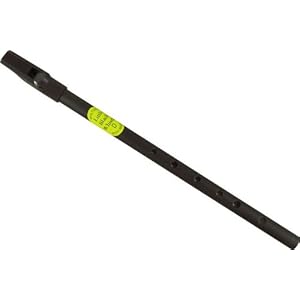
Instrument of the Month: Penny Whistle

It's August and you know what that means. it's time again for Instrument of the Month! This time around we will be looking at :

The Irish Penny Whistle


Also called the tin whistle, or feadog, the Irish penny whistle is an instrument of Irish (obviously) decent that has been around for thousands of years. It is an end-blown, six-holed fipple flute. It's most closely associated with Celtic or Irish music, and is a great tool for learning basic reels. It's also fantastic for beginning musical education.


The modern penny whistle as we know it was born in England in the mid-1800s, but the flute as a whole is part of a much larger family of fipple-flutes dating back as far as 50,000 years ago. These days they are typically made of aluminum or wood, they can be tapered or straight, and some come with a detachable head while others are one solid piece. The tin whistle is a diatonic instrument. That means if a whistler wants to play in different keys, they'll need numerous whistles in various keys, so many feadogs come with detachable heads that can be placed on different scale bodies. Know what else is awesome? The Low D Feadog.

Arguably the most famous song utilizing the tin whistle is "My Heart Will Go On" by Celine Dion, but it's long history in Celtic music has given it a robust set of songs, like Cooley's Reel above, or:

The Butterfly


Swallowtail


Concerning Hobbits


The pennywhistle is no stranger to contemporary music either, like the before-mentioned  Lord of the Rings' "Concerning Hobbits". There are many great online resources for learning to play the tin whistle, and so many new performers are learning to pick it up. Some great modern uses of the tin whistle include:

The Corrs: Little Wing


Akeboshi: Wind


The Unicorns: Sea Ghost


Flogging Molly: Devil's Dance Floor


and my personal favorite:

Jimi Hendrix Tin Whistle: What Might Have Been?


If you're interested in purchasing a penny whistle, some great online shops are here, here, here.
For more information and TABs of whistle music, check here or Google search for more.

For instruments similar to the penny whistle, check out the fife and the Irish flute. You Zelda fans might also be interested in the ocarina.

Well that's it for this month's special instrument. See you guys in September!

Wednesday, July 18, 2012

Sh*t Otaku Say Panel - A-Kon 2012

This past A-Kon myself and a few friends set about ripping on all the worst aspects of fandom, sticking mostly to problems within the american anime community. It went better than we ever imagined. We got tons of laughs (from our full house, no less), the audience was heavily involved and gave us great feedback, and even some fans from fanbases we were poking fun at were present. They were absolutely great sports and the whole panel was well received and fun as hell. Zach McClure, who put the whole panel together, has the foresight to record the whole thing. The 4-part video is below. Please know that there is foul language and adult-themes, so viewer discretion is advised. I hope you enjoy our little show, and we appreciate comments of both a positive and negative nature.

Part 1


Part 2


Part 3


Part 4


Thanks so much,and remember:
Only YOU can prevent Pony Smegma