Search This Blog

Friday, July 11, 2014

Godzilla 2014 Review

America's cultural relationship with Japan seems to have taken an interesting turn over the last decade. Anime has grown excessively popular from the early 90s onward, thanks in no small part to widely successful imports of franchise shows like Dragonball Z, Naruto and, of course, Pokemon. The novelty of Asian cuisine has also taken a small upturn in visibility, with items like panko bread crumbs, sushi and even Ramune become increasingly common in general food stores. But one of the newest phenomena to come from the East is GIANT MONSTER MADNESS! Most Americans know what Godzilla is, along with having perhaps a vague knowledge of Kaiju films in general, but recently this genre of film seems to be making its way into American produced cinema.

This doesn't count. This never happened.

Cloverfield. Pacific Rim. King Kong. Well, okay maybe that last one is already a well established American franchise that predates the Kaiju film phenomenon by 20 years, but it certainly fits the mold. Giant beast of unknown origin ends up in large city, becomes enraged and begins landscaping. Same with the Stay Puft Marshmallow Man. The appeal to producers is obvious. Special Effects, Large-Scale Disasters, and Scary Monsters are all major audience draws, and Kaiju films combine all three into a nice, guaranteed money-making package. Plus, Pacific Rim had, like, Giant Robots and an Asian chick. Guaranteed money, son!

But how does the new Godzilla film hold up? Is it worth all the time, money, and leveled buildings to make this monument to a relative niche audience here in America? Warner Bros. and Legendary Pictures says yes! But are they right? Let's look and see.


 GODZILLA 2014 REVIEW
(warning: CONTAINS SPOILERS!)

The Originals
If we're going to look at the new Godzilla, we need to look at it's history. The original "Gojira" was released in 1954. This first film used the premise of a large, radioactive monster wrecking havoc on Tokyo as a metaphor for the devastation felt by Japan in the wake of the atomic bombings of Hiroshima and Nagasaki. The power of this message was lost in subsequent films, with the franchise beginning the 'Monster vs. Monster' fighting scenario in the very next film, and later with Godzilla eventually becoming a champion of mankind, rather than one of the many beasts intent on destroying us. Much of the Showa period (and to a similar extent, the subsequent periods) is light-hearted and playful, with Godzilla defending humanity from raging monsters and keeping the destruction as a tertiary side effect rather than the main problem. Eventually Godzilla became considered more of a mascot or novelty rather than a serious threat, right up into the 2000s.

Fun for the whole Nuclear Family!


The American Film
we're only touching briefly on Roland Emmerich's 1998 Godzilla film, as it has been all but wiped completely from the fan base. Highlights are:
1. It changed the origin of Godzilla, making him essentially a mutated, radioactive iguana.
2. It rewrote him as demolishing New York instead of Tokyo.
3. It starred Matthew Broderick as the lead in an action-oriented film. (Nothing against him. Perfectly fine actor. Watch 'The Producers', you'll see what I mean.)
4. While a commercial success, it was unanimously panned by critics and audiences alike. The sequels were canned, and the studio produced a short-lived cartoon series instead.


Even the full-nude sex scene couldn't save it

The new film looks to wipe clean the mess left by Emmerich within the Kaiju genre fan base. Popular opinion seems to think it's been successful. And that belief certainly holds water. As a Kaiju film it's quite enjoyable. The monsters look great and behave destructively. The fighting is fantastic. The danger feels real and easily related to. Both the Japanese and Nuclear Bombing roots are respected and integrated well. The acting is well balanced, ranging from as-good-as-it-needs-to-be to top-tier performances. The movie is solidly constructed, directed, and has a clear beginning, middle and end.

But still with all this going for it, there's a lot it could benefit from as well. As much as it's a fun and well done film (and it is), I don't see it blowing any minds or becoming a cinema classic. Frankly, there's just not enough substance in it for us to latch on to. That may sound harsh for a film that's being so highly touted and fulfilling so many die-hard fans expectations (which it absolutely does). To better explain this, let's look at a few individual points more closely. Let's start with:

The Hero

 
The archetype of 'The Hero' is essential to any successful, classic film. It's through The Hero that we, the audience members, relate to the world in the movie we're watching. But what is a Hero? Well a hero can be anybody. A little girl. A dog. A soldier. But there are some things they must all have in common. First of all, they must be a decent yet realistically flawed individual. It's not necessary that this flaw be world-shattering, but it should be enough to keep the Hero from achieving some form of personal growth. At some point in the film, this flaw causes the Hero to undergo an experience which, upon completion, the Hero has learned to grow and address this flaw. It's usually best if this personal growth is an indirect result of the Hero's journey. Neo saves Morpheus from the Matrix and begins to believe in humanity. John McClane saves the hostages and learns to better appreciate the people in his life. Scott Pilgrim kills all the evil exes and learns to stop being afraid of real relationships. Such is the way of films we love and revisit, as they help us feel connected to ourselves and the human condition. But putting it plainly, there is no Hero in the new Godzilla. There is a central character we follow throughout the film, and see to the completion of it, but this man does not overcome a personal struggle at the end of the film. In fact, the one character flaw we see fixed occurs about 20 minutes into the movie, right at the beginning of the conflict. Our main man learns to forgive and make peace with his estranged father, who has died just moments before as a result of the MUTO Monster outbreak. He then spends the remaining length of the movie attempting to get home to his wife and young son, which is a perfectly noble goal. But it doesn't teach us, the viewer, an important truth, and that's what makes a good film an important film. Speaking of learning things, the next point we'll be looking at will be:

The Moral

 
The moral is closely tied to the central theme of the movie. Quite simply, the moral is the overall lesson or message the team behind the film wish to pass on to the viewer or viewers. The Toy Story trilogy's moral is that change is inevitable, and we must grow to find the good in it. Blade Runner teaches us that the human experience is a beautiful but bittersweet one. The Moral provides a major enhancement to the movie experience, and is usually tied very closely to the Hero's journey. But again in this, Godzilla 2014 falls short. The 1954 Gojira had this in spades, as it was a reminder of the terrifying consequences of nuclear warfare. The monster in that film was our creation, a byproduct of our destructive nature, and now Frankenstein's Monster had returned to wreck havoc. But in this new film, there is no connection like that. Humanity is merely an innocent bystander to this ancient struggle of monsters from eons before we evolved. At one point Dr. Ishiro Serizawa (played aptly by Ken Watanabe) makes a statement of Mankind's irresponsibility in our attempts to control nature, a statement he sticks with throughout the film. But the thing is, nothing we've done has caused this. The MUTO monsters aren't awoken by unnecessary deforestation or rising sea levels. The nest of two eggs is found accidentally by diggers, but by that point one of the eggs has already hatched and run off to sea, and the other egg is still dormant. Researchers take the egg that's still intact, and just study it. They don't try to destroy it (for fear of the high levels of radiation within seeping out and killing everyone) and they don't try to awaken it (because they're not stupid). All they do is study it, attempting to find a way it could be destroyed without harming us, as well as to determine whether it would be hostile to us. There's no great sin to learn from, no moral to pass on to the audience. All those scientists die as a reward for doing the smartest, most cautious thing they can.

Conclusion
These are small complaints for a movie of this caliber in the niche market that Kaiju films occupy. The film is better than it needed to be by leaps and bounds, and is as good an example as any of a solid, well-made film. But the lack of a Hero, Moral and other small detractions effect the larger picture in surprisingly big ways. Unless you're a Kaiju enthusiast, I don't see it making your list of favorite films.

Should I see it?


Yeah, if it piques your interest. Even if you're not a fan of this genre, this is a well made, solidly-constructed film that works for the purpose it was designed for. It's simple, destructive fun.


Tuesday, June 24, 2014

My electronic music is on Bandcamp

I've started building electronic music as a hobby outside of my acoustic/folk music. It's mainly simple rhythm and techno type stuff, and good background music for dance parties. I compose using a variety of applications like FLStudio (PC), Pocketband (Android), and different versions of Rytmik (3DS). Give them a listen and, if you like what you hear, support it's creation by purchasing it on my BandCamp!


That's DRIVe, one of the currently 4 songs I have available for listening and purchase. Hit up the link and give them all a listen!

Saturday, June 21, 2014

Rainbow Connection on Sanshin

Right around February last year I got my first Sanshin. It's the cheaper "NEW WOOD" model from Asoviva Sanshin, made with a thin wood panel rather than snakeskin, but it's actually quite good. I at first found myself taken aback at how different it was to  play from Guitar or 'Ukulele, being fretless and tuned so unconventionally from western instruments. Now that I'm used to it, I usually find it hard to put down once I start playing, and I've learned quite a lot on it. This is the first video I've uploaded with it, a cover of Rainbow Connection from the Muppets Movie. Enjoy!


Back for good, hopefully.

I think it's pretty obvious by now how awful I am at being consistently involved in my own passions. I don't switch passions on a whim like a lot of people who have this problem, but I'm INSANELY bad at staying dedicated to maintaining them. Nowhere is that more apparent than with this blog. I had started it just to kind of compose my thoughts and make sure I was producing things on the regular, but I have a bad habit of thinking that the amount of immediate response I get is equal to the value of a certain pursuit. I'm desperately trying to get out of my state of mind, but it's a struggle, certainly. If you're one of the few people who visit and enjoy this blog, please bare with me. I promise I'm trying to get my head in the right place so I can enjoy my passions just as they are.

Meanwhile, as long as you're baring with me, you might as well be BEARING with these guys!


Tuesday, October 30, 2012

Instrument of the Month: Theremin

You find yourself in a room. You don't know where, but the cold hospital gown you seem to be wearing indicates something has gone wrong. You search around, down empty hallways and scrub rooms, searching for a glimpse of humanity. As you look, you feel a slight shiver beginning to work it's way up your back. You realize an odd noise has been playing for a few moments , a low humming tone that has been quietly rising in frequency over the past few minutes. You also realize that it's getting louder. Every inch of your body is panic. You run in the first direction you can think of. As you stumble down the hallways you hear it. The noise. Just around the corner, somehow knowing every turn you've made. Your heartbeat is pounding away in your ear. You take a left. Then a right. Where's that breeze coming from? The door! You finally spot it, just beyond the next room. You can hear the noise, swelling higher than ever before. You make a last mad dash. Success! What?! No! The door is stuck! You try to pull it as much as your strength will allow. No luck. You suddenly notice something. Nothing. Silence. You turn around slowly, dreading every inch. It can't be gone. But the room is empty. You cautiously breathe a sigh of relief, turn around, and continue on the door. The lock breaks free and the door creaks open. Suddenly the air swells to a piercing high! You scream! It's all over! You tried to run, you tried to hide, but you couldn't escape from. . .

The Instrument of the Month: The Theremin!!


It's Halloween time, and so we're taking a look at one of the spookiest (and coolest) instruments in the world. The theremin is a staple in classic cinema, finding it's niche amongst the horror and sci-fi genre. It's not difficult to see why. Here are some great examples of theremin in classic film.


The theremin was invented by a Russian man (with the coincidental name of Leon Theremin) in the early 20th century. Leon Theremin was an inventor of many gadgets (including kickass espionage tools and interlacing), and after inventing his patented instrument began touring the globe, showing off his wonderous contraption and playing music to a captivated audience. The theremin is one of the first electronic instruments and the only known instrument that is played without touching it. It has a long antenna attached to a box with a metal loop at the other end. You move you hand toward and away from the antenna to change the frequency (or pitch) of the oscillator housed in the box, whilst using your other hand to affect the volume by bringing it toward or away from the metal loop. It's all very technical and sciency, but the result is beautiful in trained hands.


What about theremin in pop culture? Examples of theremin use in professional music is not as easy to find as more traditional instruments such as the guitar, but dedicated musicians can still be found, playing covers and originals alike. Here's the legendary Jimmy Page playing one. Some good examples are here, here, and here. My personal favorite? This one.


Wanna get your own? There are actually an insane amount of options. That's the Gakken Otona Kagaku DIY theremin in the previous video. It's one of the best ways to learn how the theremin works while also getting a playable instrument. You can also buy a preassembled one here, here or here. Like figuring things out for yourself? Try making your own. Or try the more portable version with the light theremin. Want a brainy instrument that's also edible? Try the bread theremin! Don't see what your looking for? Search around, you're bound to find something.


Welp, that covers it for this month. We'll be back shortly for Instrument of the Month: November. See ya soon,and Happy Haunting!!


Saturday, August 25, 2012

DIY Instruments: An Experiment in Creativity

Music is vital to any culture. Music helps us to express our desires. To regale our adventures. To lament the mistakes of our past. Music helps us to educate and impart as much as explore and discover. But how did music come to be? After all, cro-magnon man didn't simply walk into a local GuitarCave and buy a Fishbone Bass.

caveman music was fucking sweet.

At some point, Unk the cave-guy must have heard the sound of wind whistling through a dry reed and decided he loved it. He cut off a stalk of it and drilled some holes in the side. The flute was born. And the creation bug never died. DIY music is still a common phenomenon, and people are making instruments in crazy creative ways. Like the 2-string paddle bass. Or the tootophone. I've already posted about the homemade handpan, and there's an interesting history behind the kankara sanshin. Not into the whole "starving artist" thing? Check out musical vegetables.

musically delicious.

 That's heita3, a Japanese man who is pushing the boundary on playing with your food. I salute you, sir! You as well, ragtagbag. There are literally thousands of examples of people making music out of junk on the Internet. Or musicians who heavily modify current instruments. Why? Because they can. There's no limits, beyond what space-time and your own ingenuity will allow. Ask the dude who made the jellyfish theremin. Or the maker of the mini-koto. How about the guy who plays the Legend of Zelda theme with goddamned lightning bolts? Even if your not great at craftsmanship, there are a plethora of options available. Glass bottle panflute, anyone? Now you can get drunk and stumble through Don't Stop Believing without even leaving the house! Wanna try your hand at strumming and singing? Cardboard ukulele! Like playing Guitar Hero? Why don't you learn how to actually play that thing?


Our next song is called,
"Red, red, yellow. Red, red, blue.
I like boobies. What's for lunch?"

"This is all very cool and stimulating", I hear you saying, "But I know nothing of musical theory or engineering. Surely I can't become the next Jon Gomm". Sure you can. As usual, there are tons of websites ready to help you make something tonally awesome. Instructables is full of hundreds of DIY tutorials, many of which are music related. You can also check the Music Instrument Makers Forum for information on the different aspects of building. Still not finding what you need to make your dream banjo? Just Google search it and somebody's shown you how! Want to try augmenting that old guitar from high school? Take a page from The Presidents of the United States of America and turn it into a GuitBass. Or a Basitar. There's a cool website that teaches you how to make a theremin out of a Wii-mote. Or this one that shows you how to make a harmonica out of a comb and some paper.


For blues smoother than Dom Perignon

 Whatever sound you're looking for, there's a way to make it in your own home. There's a resource online to show you how. There's a video out there waiting to demonstrate it for you, whether it requires years of woodworking skill or is so simple you can help your six-year-old make one.


or your six-year-old-at-heart

 We live in a world of unlimited technology and information, and Do-It-Yourself projects have never been more accessible. As the Internet grows and our means to connect to it become easier, music will continue to evolve and adapt. It's a very exciting time to be creative.

So what do a cardboard box, a wooden paddle, and a vegetable all have in common (besides all having grown out of the ground at one point)? They can all be used to make kickass music. Now you know.


Exactly.

Wednesday, August 8, 2012

Instrument of the Month: Penny Whistle

It's August and you know what that means. it's time again for Instrument of the Month! This time around we will be looking at :

The Irish Penny Whistle


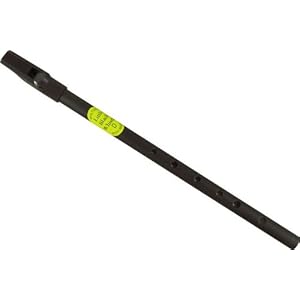
Also called the tin whistle, or feadog, the Irish penny whistle is an instrument of Irish (obviously) decent that has been around for thousands of years. It is an end-blown, six-holed fipple flute. It's most closely associated with Celtic or Irish music, and is a great tool for learning basic reels. It's also fantastic for beginning musical education.


The modern penny whistle as we know it was born in England in the mid-1800s, but the flute as a whole is part of a much larger family of fipple-flutes dating back as far as 50,000 years ago. These days they are typically made of aluminum or wood, they can be tapered or straight, and some come with a detachable head while others are one solid piece. The tin whistle is a diatonic instrument. That means if a whistler wants to play in different keys, they'll need numerous whistles in various keys, so many feadogs come with detachable heads that can be placed on different scale bodies. Know what else is awesome? The Low D Feadog.

Arguably the most famous song utilizing the tin whistle is "My Heart Will Go On" by Celine Dion, but it's long history in Celtic music has given it a robust set of songs, like Cooley's Reel above, or:

The Butterfly


Swallowtail


Concerning Hobbits


The pennywhistle is no stranger to contemporary music either, like the before-mentioned  Lord of the Rings' "Concerning Hobbits". There are many great online resources for learning to play the tin whistle, and so many new performers are learning to pick it up. Some great modern uses of the tin whistle include:

The Corrs: Little Wing


Akeboshi: Wind


The Unicorns: Sea Ghost


Flogging Molly: Devil's Dance Floor


and my personal favorite:

Jimi Hendrix Tin Whistle: What Might Have Been?


If you're interested in purchasing a penny whistle, some great online shops are here, here, here.
For more information and TABs of whistle music, check here or Google search for more.

For instruments similar to the penny whistle, check out the fife and the Irish flute. You Zelda fans might also be interested in the ocarina.

Well that's it for this month's special instrument. See you guys in September!

Wednesday, July 18, 2012

Sh*t Otaku Say Panel - A-Kon 2012

This past A-Kon myself and a few friends set about ripping on all the worst aspects of fandom, sticking mostly to problems within the american anime community. It went better than we ever imagined. We got tons of laughs (from our full house, no less), the audience was heavily involved and gave us great feedback, and even some fans from fanbases we were poking fun at were present. They were absolutely great sports and the whole panel was well received and fun as hell. Zach McClure, who put the whole panel together, has the foresight to record the whole thing. The 4-part video is below. Please know that there is foul language and adult-themes, so viewer discretion is advised. I hope you enjoy our little show, and we appreciate comments of both a positive and negative nature.

Part 1


Part 2


Part 3


Part 4


Thanks so much,and remember:
Only YOU can prevent Pony Smegma

Sunday, July 15, 2012

Odd Time Signatures

I'm currently arranging a cover of the song "Wind" by Japanese singer/songwriter Akeboshi. This song is fairly popular in Japan, and it even has a bit of an audience here at home, serving as the first ending theme to the popular anime Naruto. It's reflecting narrative themes and somber atmosphere place it right at home with other 'soul-searching' type songs, but there's something different about Wind.


More specifically, Wind is written in an odd time-signature. 5/8 time, to be exact. Odd time-signatures aren't as prevalent in popular music as even time-signatures, maybe because their 'offbeat' nature may be difficult for some musicians to work with rhythmically. Some beginning artists (yours truly included) feel more comfortable writing in 4/4 or 3/4 time (or 'common time'), and writing in an odd time-signature can feel daunting if you've developed a natural habit of writing 'evenly'. (is that word applicable?)

However, there are some really cool songs that incorporate odd time. Examples include:

The original Mission Impossible theme. (5/4)


Solsbury Hill by Peter Gabriel. (7/4)


5/4 by the Gorillaz. (5/4 guitar, 4/4 everything else)


They also make the rounds in plenty of Jazz and Blues songs, as well as a fair repertoire in Classical music.

So the next time you sit down to pen a classic song, consider moving that beat forward one more note. You never know, it may be the best thing you ever did!


Wednesday, July 4, 2012

Happy Independence Day!

It's July the 4th today, the day when we declared our emancipation from England all those years ago. Soon afterward we began laying the foundation of a nation that would go on to become one of the most powerful in the world. We've made our fair share of mistakes (as any hippy or frustrated foreigner may tell you), but everyday I meet people who remind me that we are a country comprised as much of well-minded people as it is those obnoxious hate-mongers the media keeps idolizing. I'm proud of where I come from, and I hope you are as well. After all, there are talented examples of patriotism everywhere.

Like these people


or this guy


or this lovely lady


even this talented non-American


America! FUCK yeah!


And of course the best act of patriotism ever.


So happy 4th, everyone. I'm proud to call myself a patriot and hope you do as well. And as we end off this post, I ask that you all stand, put your right hand over your heart, and follow along to our national anthem.


oops.

The Dark Knight Rises is gonna Kick Ass

I, like many of my friends, am very excited to see The Dark Knight Rises on the 20 of this month. Christopher Nolan's Batman trilogy is coming to an end with this film, and it looks like it's going to be an amazing send-off. Bane is going to fuck Bruce's shit all kinds of up, a far cry better than the events of his last movie.

Pictured: Bane

What really has me overly-excited for TDKR, however,  is that Bane seems to be taking a back-seat to all the chaos that will be going on. He's the main villain, definitely, but the trailer has it looking like he's building to something grander. As though he's simply a conductor to this pre-orchestrated apocalypse, showing up at the beginning to tell Batman his life is decidedly over, then returning to his lair to watch his masterpiece unfold while wearing a smoking jacket and stroking a white cat.

Pictured: Bane?

But we know that won't be the case. Not entirely, anyway. For those of us who know Batman's history with Bane, there's only one reason we're going to see this movie. We're going because we want to see Bane break Batman's spine. It's been integral to their relationship, so it's assumed it will occur. And high-five to Nolan for taking Bane, a villain who may seem a little ridiculous in the gritty realism of BatBale's world, and turning him into an intimidating badass. That mask is incredibly boss, and talk about a terrifying voice. This is going to be every bit as scary and fantastic as Heath Ledger's performance in The Dark Knight. Psyched to see Selina Kyle and the Batwing finally showing up as well.

So get ready, guys. Because the end's coming to Gotham, and it will be unforgettable.

Sunday, July 1, 2012

Instrument of the Month: Handpan


Today marks the first day of July, and beginning this week I am starting an “Instrument of the Month” blog post. The first week of every month I will select a musical instrument at random, and give an insight into its history, creation and how it has been used in music, both in current times and historically.
So let’s get started. The instrument of the month for July 2012 is:

The Handpan


The Handpan is relatively new to the music scene, but the impact it has made is palpable. Developed as the 'Hang' by PANart in the early 2000’s, the handpan has quickly become heavily sought after for its ethereal sound. Made originally of a ‘nitrided steel sheet’ formed into a dome, the handpan has several small dents hammered into the surface to form the different notes of the scale. Then it is melded with another dome that has a large sound hole carved into the bottom. The result?


Beautiful bell-like tones.

At the time PANart was the only one developing the instrument, and not in enough quantities to meet demand for it. Eventually all orders were placed on a very long waiting list (up to five years), and those seeking to finally purchase their handpan would have to fly to Bern in Switzerland to retrieve it.

Soon after a new company surfaced. Pantheon Steel introduced its own handpan, the 'Halo' in 2007. This is also when the term 'Handpan' was first used to describe the instrument. They were soon flooded with requests and orders. People couldn't get enough of these instruments!

As more and more people begin to develop their own methods of creating handpans, the market is steadily growing. Obtaining one is still no easy task, however. PANart chooses their customers via handwritten letters, Pantheon Steel has mailing list lotteries to select their winners, and everyone else typically has a long waiting list. You're best bet is usually to wait on an order list with a newer company or try to win one on eBay.

Or, you know, build one.


.
It turns out, there are tons of instructionals for building your own. that forum, HandPan.org, is probably the best resource on the internet for information on developments, purchasing, and making your own handpan. Now it's insanely noisy and requires dedication, but the results are worth the effort.

So, all this is well and good, but what kind of music can you play on a hand pan?


pretty damn good music.

For more information on the handpan and its wonders, I recommend the HandPan forums. You can also check here.


Also guess what? Spacedrum is selling them directly from their maker's website.

And for a similar instrument, check out the Steel Tongue Drum.

Well that's it for this post. See you guys in August for 'Instrument of the Month'!

Saturday, June 30, 2012

Okinawan Sanshin

One of the instruments I've been keeping my eye on is the okinawan Sanshin. It's an interesting instrument with a great history. It traveled to Okinawa from mainland China where it started out as the Sanxian, and then eventually made it's way to mainland Japan. You may be familiar with it's younger cousin, the Shamisen.

The sanshin is an instrument with a distinct sound and playing style, and it's really cool to see companies like Asoviva start to encourage more and more contemporary playing styles. Some good examples of popular songs on the sanshin are here and here.

I think it's really great to live in a time when so much knowledge is available so quickly and easily. This is no more apparent than in the resurgence of certain instruments, as well as how many people are teaching themselves music without the use of a tutor. There's so many cool sounds out there to experiment with and thanks to the internet, those sounds are usually just a click away. Still, there are some sounds that would be hard to find a proper place for, but that's all part of the fun of music.

In any case, the sanshin is one of those instruments that are slowly making their way into pop culture, and it's exciting to see what direction it will go in.

If you are interested in learning more or purchasing a sanshin, click here, here, or here. (the last one may require Google translate)

Another great resource for sanshin information and playing techniques in the Simple Sanshin.

For a more rustic version of the sanshin, check out the Kankara Sanshin

.

Friday, June 29, 2012

Kamoa's new beauty


I'm very excited for the Evolve steel string semi-hollow from Kamoa that is just now beginning to be sold in the ukulele community. I know there are plenty of players who don't see the point in steel strung, electric ukuleles, seeing it as "ape-ing" electric guitars and therefor redundant, but I think having the option available is exciting. I greatly look forward to seeing these beautiful ukes put to use in creative ways, and the number of people that are planning to buy them means we should have plenty of excellent examples.

The steel string electric ukulele is not necessarily a brand new idea. Risa has been doing it for a while, and Eleuke is well known for their solid-body electrics. I'm a little sad to hear that the long-anticipated steel-string Eleuke ukuele has been recalled at the last minute, but these things do happen.

The coolest steel-string ukulele in my opinion? This one.

So which steel-string do you like best? Let me know below.

Thursday, June 28, 2012

I'm Back


Wow. Two years it's been. The heat in Dallas is terrible and it caused me to remember I used to keep a blog that I stopped posting to. Maybe it's time to restart this little look into my life and interests. A bit has happened since last we met. My brother got married. I went to my first open mic night, and got offered my first gig. Sadly it did not go through. I've also been working on an album, hopefully to have out later this year. I hope to update this blog better than I did last time, so stick around.

 See ya soon.

P.S. Better leave some music. It's only proper. Here's one of my few recorded originals.

Friday, August 20, 2010

Enjoying playing for others more

I've been playing a lot out in public lately. It's a lot of fun playing in front of an audience now that the performance jitters are going away. The other day I even had an impromptu jam at a wedding! I've considered going out and finding gigs, but I just don't know if I'm good enough for that. In any case, its nice to stop worrying about playing out and about now. :D

Tuesday, August 3, 2010

Met a fellow uke player

I was with my friends at Bass Pro shop in Grapevine the other day. Like always I was carrying one of my ukes around and an employee named Larry commented on it. It turns out he himself was a ukulele aficionado. He even had a Kala Pocket Uke! I was so jealous! I always find it cool when I bump into another uke-player. it doesn't happen very often though. The last time (excluding Bass Pro shop of course) was a few months ago at Gamestop when I ran into a fellow Ukulele Underground member. still, it's good to know there are so many ukulele players in the Dallas area. Now if only I could find some local ones to jam with.

Hot N' Cold on Ukulele

This video is a cover of Katy Perry's Hot N' Cold. I decided to wear my goofiest hat for this cover, I think I made the right choice.


Enjoy!

Sunday, August 1, 2010

Ukulele Genres

One thing I often have trouble with is recreating the feel of certain genres using the ukulele. I can play a song, no problem, but I often want to do more than just strums chords. This is probably the main reason why I take so long in between videos. I love all kinds of music, and I REALLY love to PLAY all kinds of music, so I struggle alot with more complicated things like Metal and especially Pop Techno. So I often watch people cover different genre's and try to mimic their techniques. So here I've compiled a list of my favorite examples of ukulele being used well in different genre's. I hope this helps anyone who finds themselves in the same boat I am. :D

(Classic Rock) Jimi Hendrix's Little Wing

(Classical) Bach's Bouree in E Minor

(Metal) Ozzy Osbourne's Crazy Train

(Pop) Michael Jackson's Billie Jean

(Techno Pop) Lady Gaga's Telephone

(Modern Rock) White Stripes' Fell In Love With A Girl

I hope you are inspired by these great uses of ukulele! :D

Saturday, July 31, 2010

Mad World on ukulele

Next in the cavalcade of Evan Wearing Stupid Hats is my ukulele cover of Gary Jules' Mad World. originally created by Tears for Fears, Gary Jules drastically changed the feel of this song with his version. And so I donned my most Donnie Darko-esque beanie and played this cover. I hope you enjoy it!